
Walking for Fitness: A Practical Guide to Getting More From Every Step
Walking is a low-barrier way to build a regular activity habit, and a few simple tweaks and strength moves can help you get more out of it.
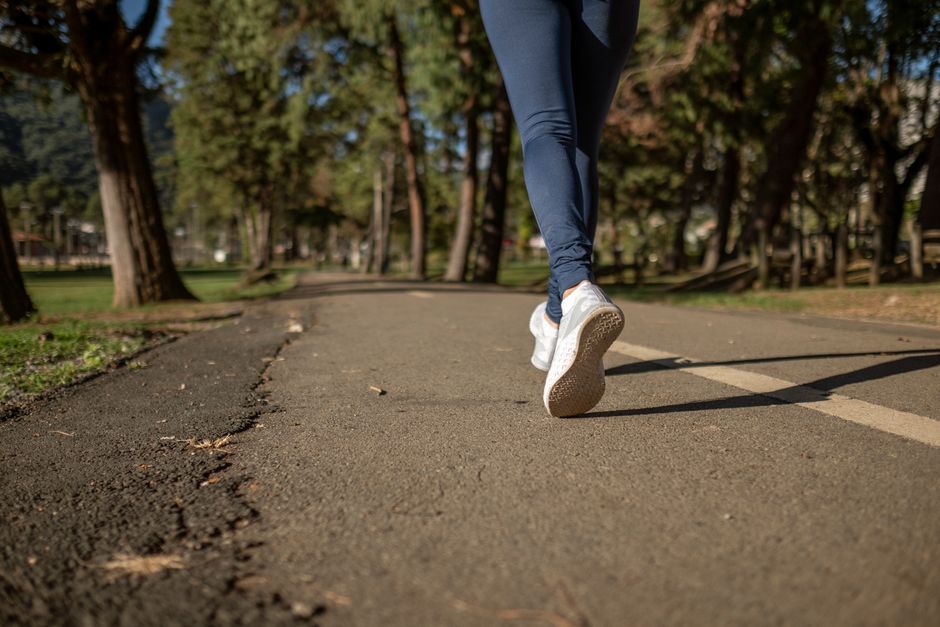
Walking needs no gym membership, no special skills, and very little gear, which is why it is one of the most accessible ways to stay active. It is also easy to dismiss as too gentle to count. Done regularly and with a bit of structure, walking can be a solid foundation for general fitness. This guide covers how much to aim for, how to judge your effort, how to build a simple weekly routine, and which strength exercises you can do at home to support your walking.
How Much Walking Should You Aim For?
Public health guidance gives a useful target. The World Health Organization and the US Physical Activity Guidelines for Americans both recommend that most adults accumulate roughly 150 to 300 minutes of moderate-intensity aerobic activity per week, or an equivalent amount of vigorous activity. Brisk walking is a common example of moderate-intensity activity. These guidelines also recommend muscle-strengthening activities on two or more days per week.
Treat those numbers as a long-term target, not a starting requirement. If you are currently inactive, any regular walking is a reasonable place to begin, and you can build up gradually. Sessions can also be split up. Three 10-minute walks count toward your weekly total just as one 30-minute walk does.
Finding the Right Intensity
Moderate intensity usually means your breathing is faster and your heart rate is up, but you can still hold a conversation. If you can sing the words to a song, you may be going easier than moderate. If you can only manage a few words at a time, you are moving at a more vigorous pace. This simple method is often called the talk test, and the CDC describes it as a practical way to gauge effort without any equipment.
Effort is personal. A pace that feels moderate for one person may feel hard for another, and it can change with fitness, terrain, heat, and how tired you are. Use how you feel as your guide rather than comparing yourself with anyone else.
A Simple Four-Week Starter Structure
If you want a framework, try this and adjust it to suit you. In week one, walk for 15 to 20 minutes at a comfortable pace on three or four days. In week two, add 5 minutes to each walk. In week three, keep the longer walks and include a few short stretches of slightly faster walking, such as 1 minute faster followed by 2 minutes easy, repeated a few times. In week four, keep the pattern going and add a fifth day if it feels manageable.
If a step up feels like too much, repeat the previous week. Consistency over many weeks matters more than how quickly you progress. Plan your walks as you would any appointment, and choose times that you can realistically keep.
Ways to Make Walking More Challenging
Once your usual walk feels comfortable, there are several gentle ways to raise the challenge. You can walk a little faster, extend the duration, choose a route with gentle hills, or use interval-style pacing by alternating brisk and easy segments. Change only one variable at a time so you can tell what your body tolerates well.
Good technique helps. Stand tall with your gaze ahead rather than at your feet, keep your shoulders relaxed, let your arms swing naturally, and take steps that feel smooth rather than overstretched. Wear comfortable, supportive shoes that suit the surface you walk on.
Why Add Strength Work?
Walking mainly trains your cardiovascular system and the muscles of your legs and hips in a repetitive, low-load way. Adding simple strength exercises two days a week helps meet the muscle-strengthening part of the guidelines and trains the muscles you rely on with every step. The four exercises below use only body weight and a sturdy chair or low step, which most home setups already have. They can be done after a walk or on a separate day.
Exercises
Chair Squat (sit to stand)
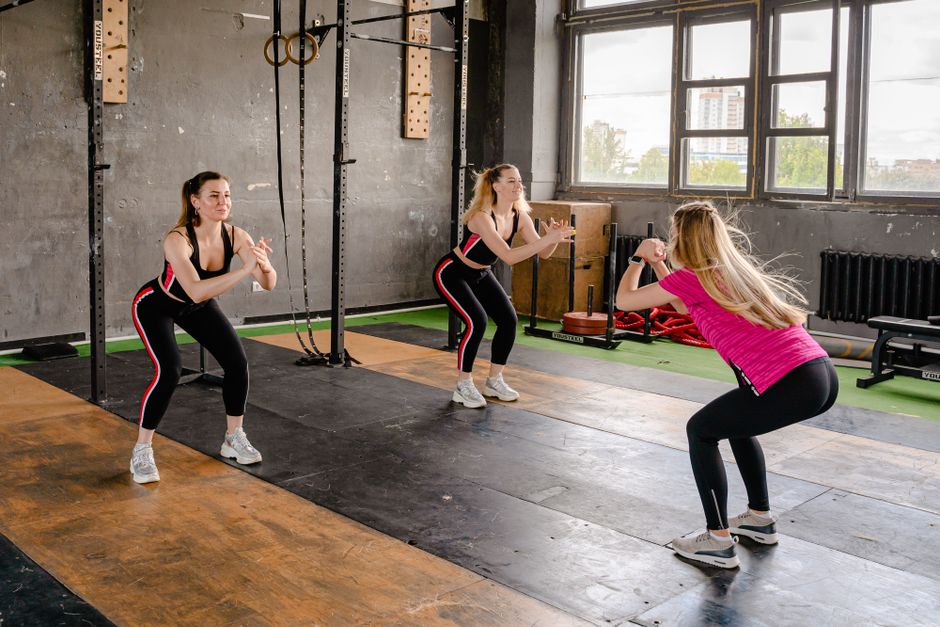
Sets and reps: 2 sets of 8 to 10 reps, resting 60 seconds between sets
Stand in front of a sturdy chair with feet about hip-width apart. Push your hips back and bend your knees to lower until you lightly touch the seat, then stand up by pressing through your whole foot. Keep your chest lifted and your knees tracking in line with your toes. Use your hands for support if you need it, and only go as deep as feels comfortable.
Glute Bridge
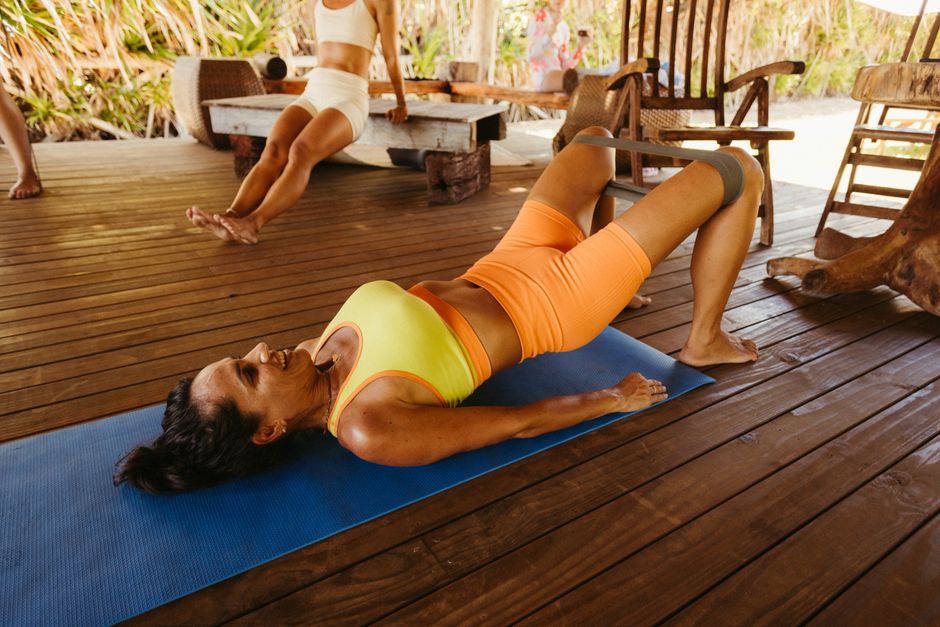
Sets and reps: 2 sets of 10 to 12 reps, resting 60 seconds between sets
Lie on your back with knees bent and feet flat on the floor, about hip-width apart. Press through your heels to lift your hips until your body forms a fairly straight line from shoulders to knees. Pause briefly, then lower with control. Keep your ribs down and avoid arching your lower back.
Calf Raise

Sets and reps: 2 sets of 10 to 15 reps, resting 45 to 60 seconds between sets
Stand near a wall or countertop for light balance support. Rise onto the balls of your feet, pause briefly, and lower slowly. Keep the movement steady rather than bouncy. If this is easy, you can progress to doing it on one leg while holding support.
Step-Up
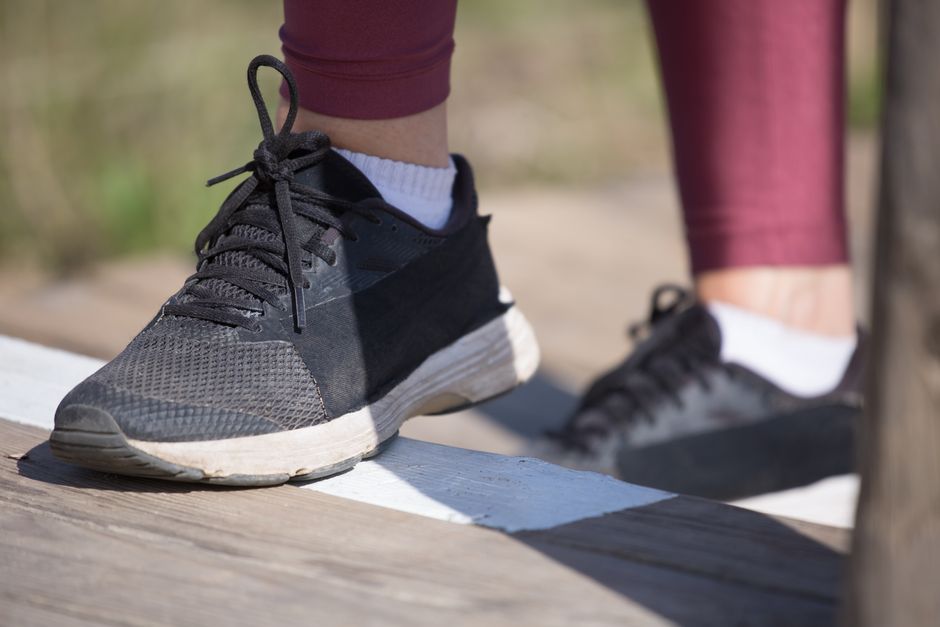
Sets and reps: 2 sets of 6 to 8 reps per leg, resting 60 seconds between sets
Use a low, stable step or the bottom stair, with a handrail or wall nearby if needed. Place your whole foot on the step, press through it to stand up tall, then step back down with control. Complete all reps on one leg before switching. Choose a height that lets you stay balanced and keep your knee comfortable.
This article is general information, not medical advice. Talk to a doctor or qualified professional before starting a new exercise program.