
Rest Days and Recovery: How to Take Time Off Without Losing Momentum
Rest days are part of a good training plan, and this guide explains how to plan them, how to tell when you need more, and how to spend them with gentle movement at home.

Many people treat rest days as a gap in their routine, or as a reward they have to earn. In practice, recovery is part of training. Exercise gives your body a reason to adapt, and rest gives it the time to do so. If you have ever felt flat, sore, or unmotivated after several hard sessions in a row, you already know why days off matter. This article covers what rest days are for, how to schedule them, what to do on them, and how to listen to your body without overthinking it.
Why rest days matter
When you lift weights, run, or do a hard class, you place a temporary stress on your muscles, joints, and nervous system. The improvements you are after, such as better strength, endurance, and coordination, develop in the hours and days afterward, when your body can repair and adapt. If every day is a hard day, that recovery window shrinks.
Rest also helps beyond the physical side. A day off gives you mental space, makes it easier to stay consistent over months, and lowers the chance that you will quit a plan that felt too relentless. Consistency over time matters more than any single workout.
Rest days versus active recovery
A complete rest day means no planned exercise. You still move around normally, but you do not do a workout. An active recovery day means light, easy movement, such as a relaxed walk or gentle mobility work, that leaves you feeling better rather than more tired.
Neither is better for everyone. If you are very sore, short on sleep, or under a lot of stress, a full rest day is a good choice. If you feel stiff but otherwise fine, easy movement can feel good. The key is that active recovery stays easy. If you finish it feeling more tired than when you started, it was too much.
How many rest days do you need?
There is no single right number. Public guidelines, such as the U.S. Physical Activity Guidelines, recommend that adults do muscle-strengthening activities on at least two days per week in addition to regular aerobic activity. That leaves plenty of room for days off. Many beginners do well with two or three non-training days a week, and some people prefer one full rest day with lighter days around it.
A simple structure is to avoid training the same muscle groups hard on back-to-back days and to follow your hardest sessions with an easier day. For example, you might do a full-body strength session on Monday, a walk on Tuesday, another strength session on Thursday, and a rest day on Friday. Adjust the pattern around your schedule, your experience, and how you feel.
Signs you may need more recovery
Normal muscle soreness after a new or harder workout is common and usually fades within a few days. It is different from signs that you may be doing too much for your current situation. These can include feeling tired for several days in a row, a workout effort that feels unusually hard, trouble sleeping, low motivation, or aches that linger or get worse instead of better.
If you notice several of these, try reducing the intensity or volume, adding an extra rest day, and paying attention to sleep and food. If the signs persist, or if you have sharp pain, swelling, dizziness, or anything that worries you, stop and check with a qualified health professional.
The basics that support recovery
Rest days work best when the rest of your habits support them. Sleep is the biggest factor for most people, and public health agencies such as the CDC provide general sleep guidance for adults. Eating regular meals with enough protein, plenty of plants, and enough overall food for your activity level helps your body repair. Drinking water through the day and managing stress also help.
None of this has to be perfect. Small, steady habits, such as a consistent bedtime, a walk outside, and a decent meal after training, add up over time.
A gentle rest-day routine
The routine below is optional and meant to be easy. Move slowly, breathe normally, and stay in a comfortable range. You should feel looser afterward, not worked. If any movement causes pain, skip it. You can do all of it in about 15 to 25 minutes with no equipment beyond a mat or a towel on the floor.
Exercises
Easy walk

Sets and reps: 10 to 20 minutes at a conversational pace
Keep the effort low enough that you could talk comfortably the whole time. Walking outside is nice, but a loop around the house or a treadmill also works. This is about circulation and a change of scenery, not fitness.
Cat-cow

Sets and reps: 1 to 2 sets of 8 to 10 slow reps
Start on hands and knees with hands under shoulders and knees under hips. Gently round your back, then gently lower your belly and lift your chest, moving with your breath. Keep the range comfortable and stop short of any pinching or pain.
Glute bridge (bodyweight, easy)
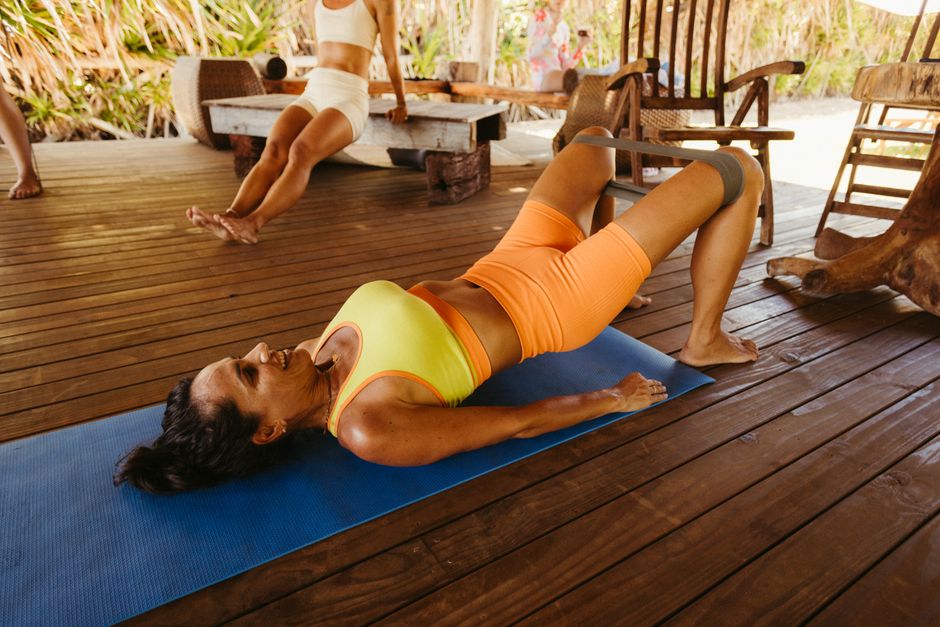
Sets and reps: 1 to 2 sets of 8 to 10 reps
Lie on your back with knees bent and feet flat on the floor. Press through your heels to lift your hips until your body forms a fairly straight line from shoulders to knees, then lower with control. Keep the effort light, as if warming up rather than training.
Child's pose
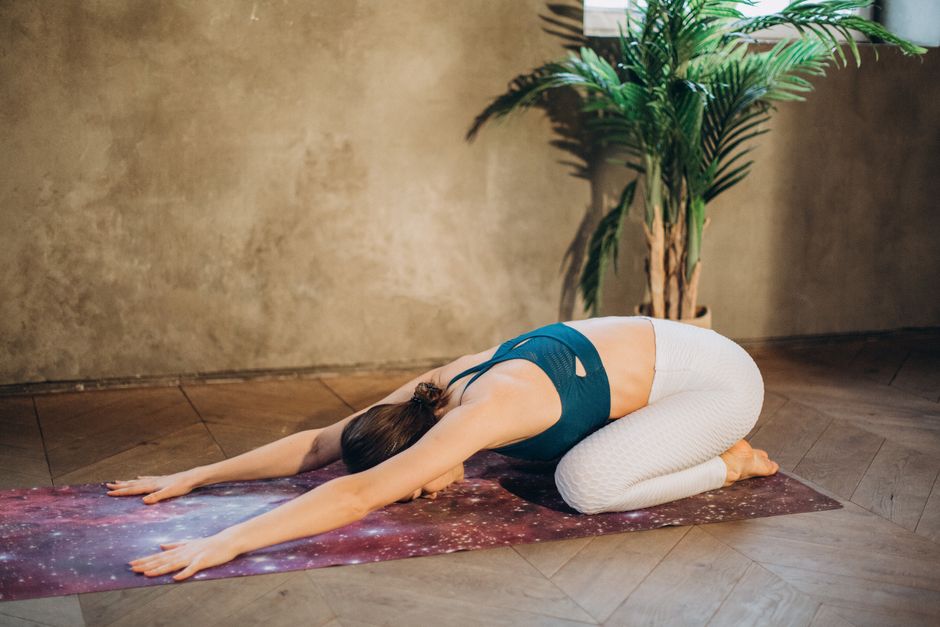
Sets and reps: 2 to 3 holds of 20 to 30 seconds
From hands and knees, sit your hips back toward your heels and rest your arms forward or beside you. Breathe slowly into your back and sides. If your knees are uncomfortable, place a folded towel behind them or widen your knees slightly.
This article is general information, not medical advice. Talk to a doctor or qualified professional before starting a new exercise program.