
A Simple 8-Minute Warm-Up and Mobility Routine for Home Workouts
Learn a short, equipment-free warm-up that gradually raises your effort level and moves your main joints through comfortable ranges before you train.
Most of us know we should warm up, but it is often the first thing to go when time is short. A good warm-up does not need to be long or complicated. A few minutes of easy movement can help you feel more ready, practise the positions your workout will use, and ease into harder effort gradually. This routine uses four simple exercises and only your bodyweight, so you can do it on a mat in your living room before a strength session, a run, or a walk.
What a warm-up is actually for
A warm-up is a gradual transition from rest to exercise. In practice, it has three jobs: raise your heart rate and breathing a little, move your joints through the ranges you are about to use, and rehearse the patterns of your main workout at a lower intensity.
It is not a test or a workout in itself. You should finish feeling a bit warmer and looser, not tired. If you are out of breath or sore after your warm-up, scale it back.
A warm-up cannot guarantee you will avoid soreness or injury, and it does not replace sensible training choices such as appropriate weights, good technique, and adequate rest. It is one helpful habit among several.
How to structure your 8 minutes
Start with one to two minutes of easy general movement. Marching in place, walking around the house, or gentle stepping side to side all work. Aim for a pace where you could hold a conversation comfortably.
Then move into the mobility exercises below. Move slowly and smoothly, and stay within a range that feels comfortable. Mobility work is about controlled movement, not forcing a deep stretch. You should feel gentle tension or a feeling of opening up, never sharp or pinching pain.
Finish with one or two light practice sets of your first main exercise. If you are about to do goblet squats, for example, do a few reps with a very light weight or just your bodyweight before starting your working sets.
Adjusting the routine to your day
Stiff mornings or a long day at a desk may call for an extra round of the mobility moves. If you feel fresh and are short on time, one round may be plenty. Let how you feel guide you, and keep the effort easy.
If a position is uncomfortable, shorten the range, slow down, or skip it. Using a cushion under the knees, or holding onto a sturdy chair or countertop for balance, are all perfectly good modifications.
If you have a current injury, a medical condition, or pain that persists, check with a qualified healthcare professional before starting a new routine.
Common warm-up mistakes
The most common mistake is rushing. Fast, bouncy swinging of the limbs does not do the job better than slow, controlled movement. Another is going too hard too early, which turns the warm-up into fatigue before the workout begins.
It is also easy to hold long, intense stretches before training and feel flat afterward. Gentle movement-based mobility work is generally a better fit for the start of a session, and longer stretching can be saved for the end of a workout or a separate time if you enjoy it.
Finally, remember that consistency matters more than perfection. A short routine you actually do beats a long one you skip.
Where this fits in your week
Public health guidance for adults generally recommends regular moderate-intensity aerobic activity along with muscle-strengthening activity on two or more days per week. A short warm-up is an easy way to start each of those sessions comfortably. See the sources below for the full recommendations.
Exercises
Cat-Cow

Sets and reps: 1-2 sets of 6-8 slow reps
Start on hands and knees with wrists under shoulders and knees under hips. Inhale as you gently let the belly lower and the chest lift, then exhale as you round your back and tuck your chin. Move through a comfortable range and keep the motion smooth. If your wrists are sensitive, try it on your fists or forearms, or do a seated version with hands on thighs.
World's Greatest Stretch (Lunge with Rotation)
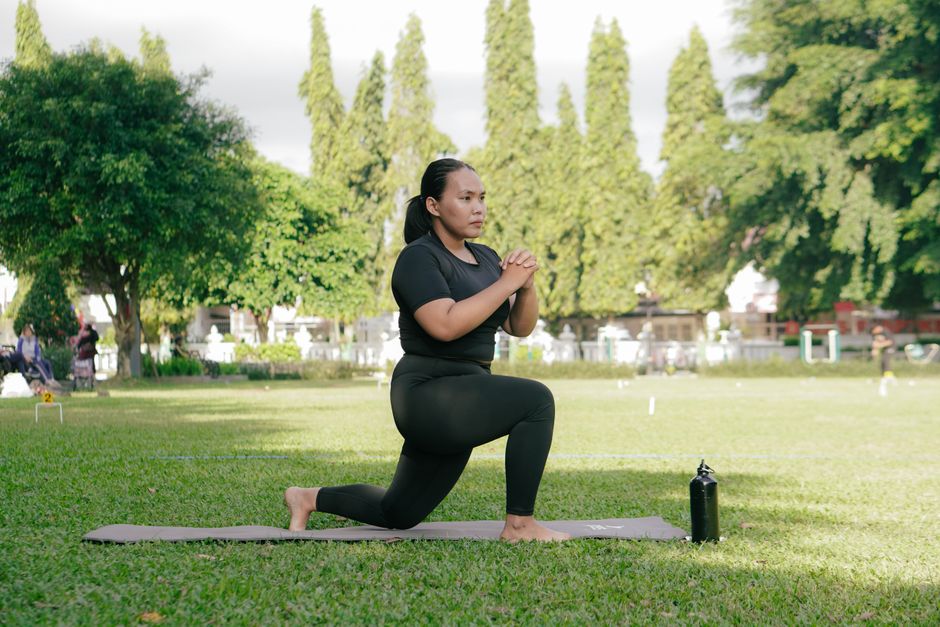
Sets and reps: 1-2 sets of 4-5 reps per side
Step one foot forward into a lunge position, with both hands on the floor inside the front foot. Rotate your upper body toward the front leg and reach that arm toward the ceiling, then return your hand to the floor. Keep the movement slow. Place a cushion under the back knee if needed, or keep your hands on a chair seat to make it easier.
Bodyweight Squat with a Pause
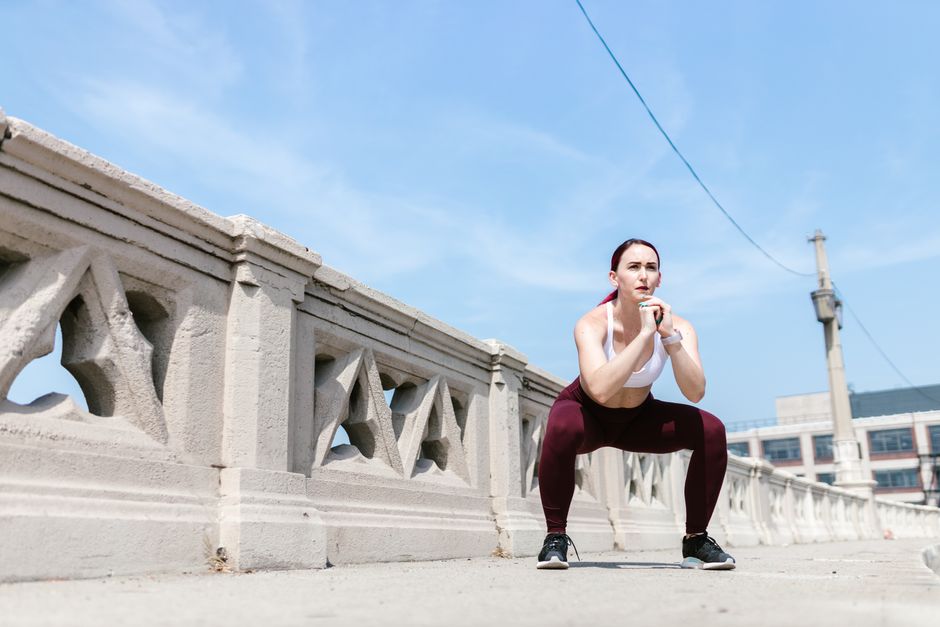
Sets and reps: 1-2 sets of 6-8 reps
Stand with feet about shoulder-width apart and toes turned out slightly. Lower down as far as is comfortable with your heels flat and chest tall, pause for a second, and stand back up. Hold onto a door frame or sturdy surface for balance if you like. Only go as deep as feels comfortable and controlled.
Wall Slides
Sets and reps: 1-2 sets of 8-10 reps
Stand with your back and head lightly against a wall, feet a short step away. Place your forearms and the backs of your hands on the wall in a goalpost position, then slide your arms up as far as you can without arching your lower back or lifting your ribs. Slide back down slowly. Stop at the height where you can keep contact comfortably.
This article is general information, not medical advice. Talk to a doctor or qualified professional before starting a new exercise program.