
A Beginner Running Plan: Your First 6 Weeks on the Road
This gentle six-week run-walk plan, paired with three simple home strength exercises, helps new runners build a steady habit without doing too much too soon.

Starting to run can feel intimidating, mostly because many beginners try to run continuously from day one, get winded within minutes, and decide running isn't for them. A better approach is to alternate short running segments with walking breaks, keep the effort easy, and let your body adapt gradually. This six-week plan uses three running days per week, adds two short strength sessions you can do at home, and leaves room for rest. Treat the numbers as a guide, not a test. If a week feels too hard, repeat it before moving on.
Before You Start
You don't need much: comfortable shoes that feel good for walking and jogging, weather-appropriate clothing, and a way to keep time, such as a phone or watch. A flat, forgiving route like a quiet street, park path, or track makes pacing easier.
Pick three non-consecutive days for running, for example Monday, Wednesday, and Saturday. Rest days give your muscles, tendons, and bones time to adapt to the new demand. If you have a medical condition, are returning from injury, or are new to exercise after a long break, check with a healthcare professional first.
How Easy Should It Feel?
The most common beginner mistake is running too fast. Your running pace should be conversational: you can speak in short sentences without gasping. If you can't, slow down or take a walking break sooner. Walking is not failure here; it is part of the plan.
Public health guidance for adults, including that from the World Health Organization and the U.S. Centers for Disease Control and Prevention, recommends building toward regular moderate-intensity aerobic activity across the week. Your run-walk sessions can contribute to that over time, but there is no need to rush toward any target.
The 6-Week Run-Walk Plan
Begin every session with 5 minutes of brisk walking, and finish with 5 minutes of easy walking. The intervals below sit in between. Repeat the pattern for the number of rounds listed.
Week 1: Run 1 minute, walk 2 minutes, 6 rounds. Week 2: Run 2 minutes, walk 2 minutes, 5 rounds. Week 3: Run 3 minutes, walk 2 minutes, 5 rounds. Week 4: Run 5 minutes, walk 2 minutes, 4 rounds. Week 5: Run 8 minutes, walk 2 minutes, 3 rounds. Week 6: Run 10 minutes, walk 2 minutes, 2 rounds, then run 5 more minutes if you feel comfortable.
If a week feels too demanding, repeat it. Slower progress is perfectly normal and tends to be easier on your body. Many beginners find it helpful to increase only one thing at a time, either the run length or the number of rounds, rather than both.
Add Two Short Strength Sessions
On two non-running days each week, do the three exercises below. They target the glutes, thighs, calves, and trunk, which all help with the repeated single-leg loading of running. Strength work will not guarantee you avoid injury, but building general strength is a sensible part of a balanced routine.
Use only your body weight at first. Move slowly, choose a range of motion you can control, and stop a rep or two before your form breaks down.
Recovery and Troubleshooting
Mild muscle tiredness after a session is common when starting out. Sharp, worsening, or one-sided pain is different; stop and rest, and consider seeking advice if it persists. Sleep, regular meals, and drinking water when thirsty all support your training.
If you miss a few days, resume at the same week or one week earlier. If you miss more than a couple of weeks, restart a little lower. Consistency over months matters far more than any single workout.
Exercises
Bodyweight Squat to Chair
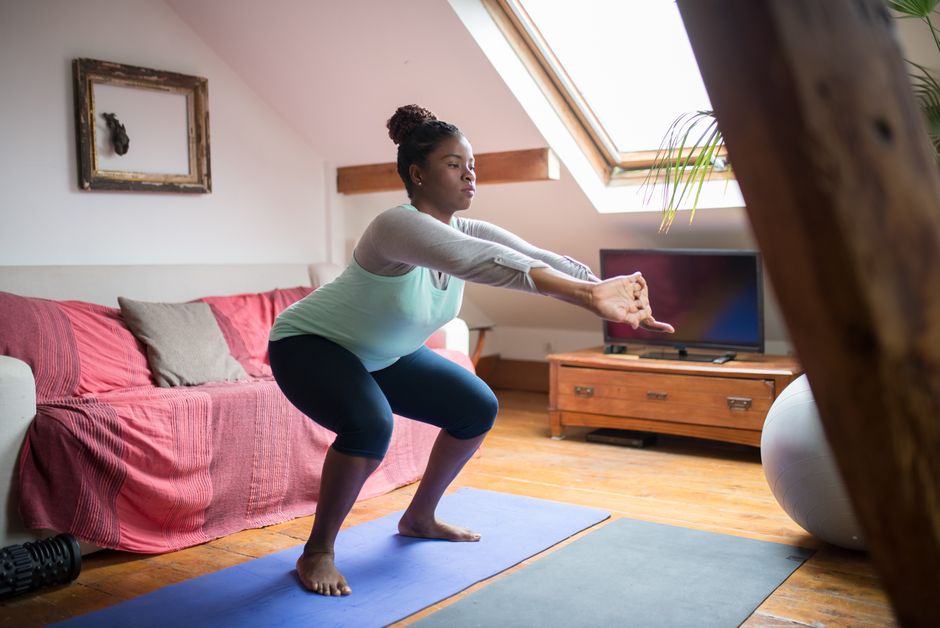
Sets and reps: 2 sets of 8–12 reps
Stand in front of a sturdy chair with feet about shoulder-width apart. Sit your hips back and down until you lightly touch the seat, then stand up. Keep your chest up and knees tracking in line with your toes. Reduce the depth if needed.
Glute Bridge
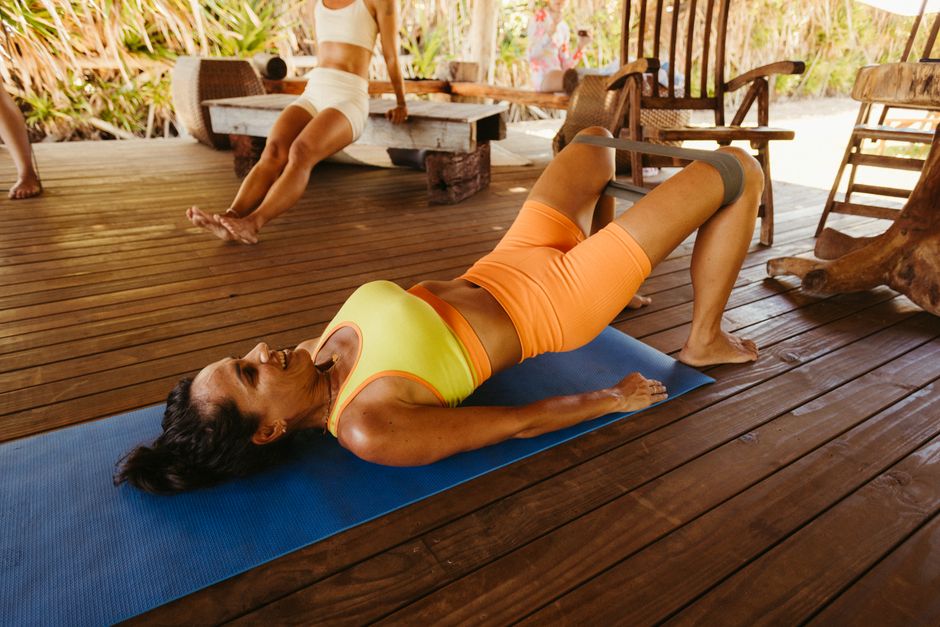
Sets and reps: 2 sets of 10–15 reps
Lie on your back with knees bent and feet flat on the floor. Press through your heels to lift your hips until your body forms a fairly straight line from shoulders to knees. Pause briefly, then lower with control. Avoid arching your lower back.
Calf Raise

Sets and reps: 2 sets of 10–15 reps
Stand near a wall or counter for light balance support. Rise onto the balls of your feet, pause briefly, and lower slowly. Keep the movement smooth. Progress to single-leg raises only when the two-leg version feels easy.
Dead Bug

Sets and reps: 2 sets of 6–10 reps per side
Lie on your back with arms pointing to the ceiling and hips and knees bent at 90 degrees. Slowly lower the opposite arm and leg toward the floor while keeping your lower back gently in contact with the floor. Return and switch sides. Move slowly and breathe steadily.
This article is general information, not medical advice. Talk to a doctor or qualified professional before starting a new exercise program.