
Home Workouts With No Equipment: A Simple Full-Body Routine You Can Start Today
You don't need a gym or any gear to build a balanced, beginner-friendly strength routine at home using just your body weight and a bit of floor space.
Skipping the gym doesn't have to mean skipping your workout. Bodyweight exercises use your own mass as resistance, so you can train in a living room, bedroom, or hallway with nothing but a little space and a comfortable pair of shoes or bare feet on a non-slip surface. This article walks through a short, balanced routine built around four basic movements that cover the major muscle groups: legs, chest and arms, core, and the back of the body. It is meant as a starting point, not a prescription, so adjust it to your current fitness level and how you feel on the day.
Why bodyweight training is a sensible place to start
Basic strength movements such as squats, push-ups, and planks have been used in training programs for a long time because they teach fundamental patterns: pushing, squatting, hinging, and bracing your trunk. Learning to do these well matters more than doing a lot of them quickly.
Public health guidance also supports regular muscle-strengthening activity. The World Health Organization and the U.S. Centers for Disease Control and Prevention both recommend that adults include muscle-strengthening activities that work all major muscle groups on two or more days per week, alongside aerobic activity. A short home routine like this one can be one way to meet the strength portion of that guidance. Check the sources below for the full recommendations and for guidance that applies to your age group or health situation.
How to set up your session
Clear a space about the size of a yoga mat. If your floor is hard, a folded blanket or a carpeted area can make kneeling and floor exercises more comfortable. Wear clothes that let you move freely.
Start with two to three minutes of easy movement to warm up: march in place, circle your shoulders and hips, and do a few slow bodyweight squats to a shallow depth. You should feel slightly warmer, not tired.
Perform the exercises below one after another, resting as needed between sets. Choose a number of repetitions that leaves you with a couple of good reps still in reserve, meaning the last rep is challenging but your form is still controlled. Finish with a few minutes of gentle stretching or slow walking if that feels good.
How to progress without rushing
Without weights, progress comes from changing the difficulty in small steps. You can add a few repetitions, add a set, slow down the lowering phase of each movement, take shorter rests, or move to a harder variation, such as going from incline push-ups to floor push-ups. Change only one of these at a time and give your body a few weeks to adapt.
Aim for consistency rather than intensity. Two or three sessions per week with rest or easy activity in between is a reasonable pattern for many beginners. If you feel unusually sore, tired, or sharp discomfort in a joint, take extra rest and scale back the next session.
Common form tips across all four exercises
Move slowly enough that you control each repetition rather than bouncing through it. Breathe steadily and avoid holding your breath for long periods. Keep your neck in a neutral position, in line with your spine, and stop a set when your form starts to break down, even if you haven't reached the target number of reps.
Exercises
Bodyweight Squat
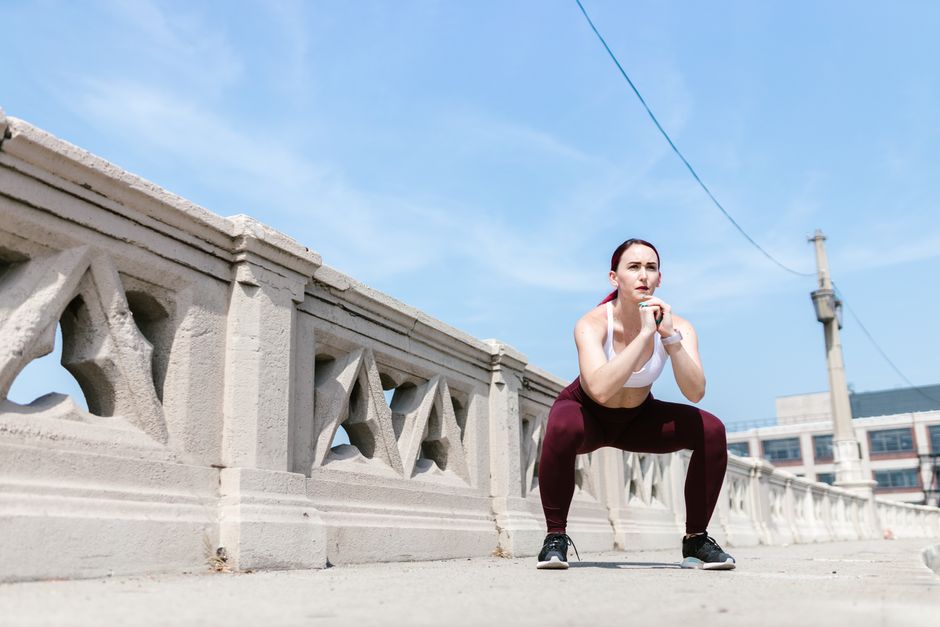
Sets and reps: 2 sets of 8–12 reps
Stand with feet about shoulder-width apart and toes turned slightly out. Push your hips back and bend your knees as if sitting into a chair, keeping your chest lifted and heels on the floor. Lower only as far as is comfortable, then press through your whole foot to stand. Your knees should track in the same direction as your toes. If balance is difficult, hold onto a sturdy countertop or lightly tap a chair with your hips on each rep.
Incline or Floor Push-Up
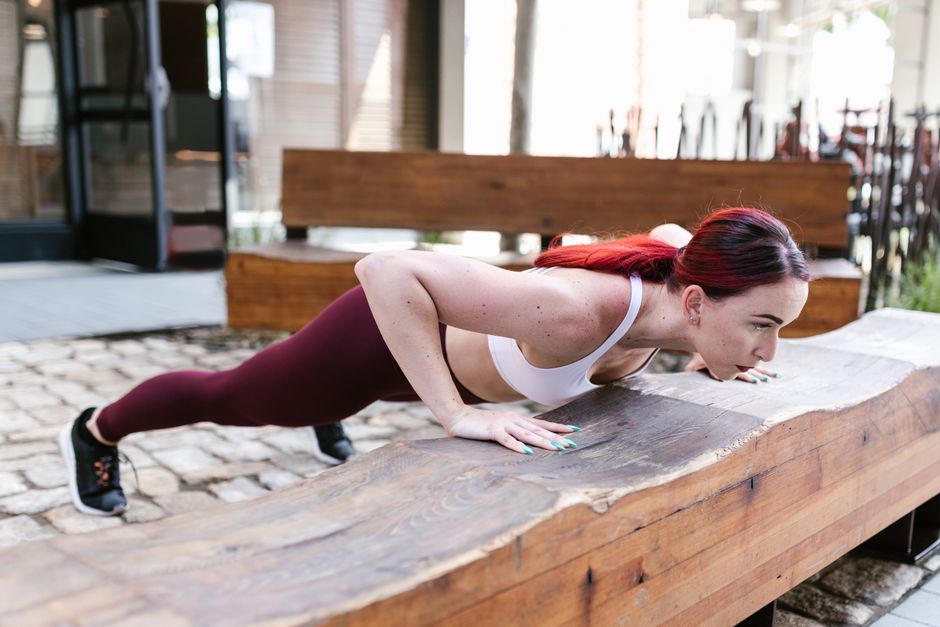
Sets and reps: 2 sets of 5–10 reps
Place your hands slightly wider than your shoulders, either on the floor or on a sturdy elevated surface like a countertop or solid sofa edge. The higher the surface, the easier the movement. Keep your body in a straight line from head to heels, lower your chest toward your hands, then press back up. If a full push-up is too hard, use a higher surface or a kneeling version. Avoid letting your hips sag or your elbows flare straight out to the sides.
Glute Bridge
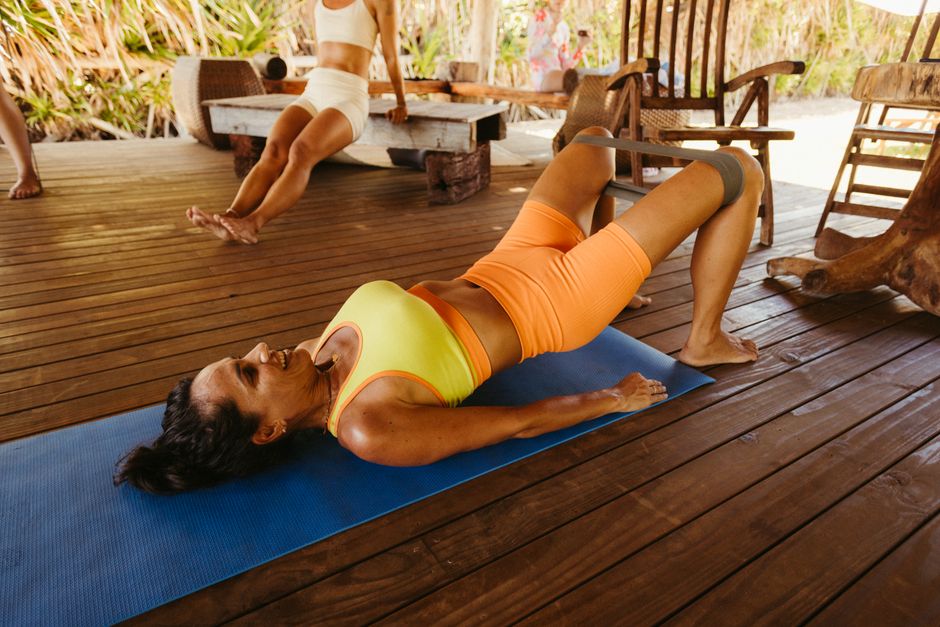
Sets and reps: 2 sets of 10–15 reps
Lie on your back with knees bent and feet flat on the floor about hip-width apart. Press through your heels to lift your hips until your body forms a fairly straight line from shoulders to knees, squeeze your glutes at the top, then lower with control. Keep your ribs down and avoid arching your lower back excessively. Pause briefly at the top to make it more challenging.
Forearm Plank
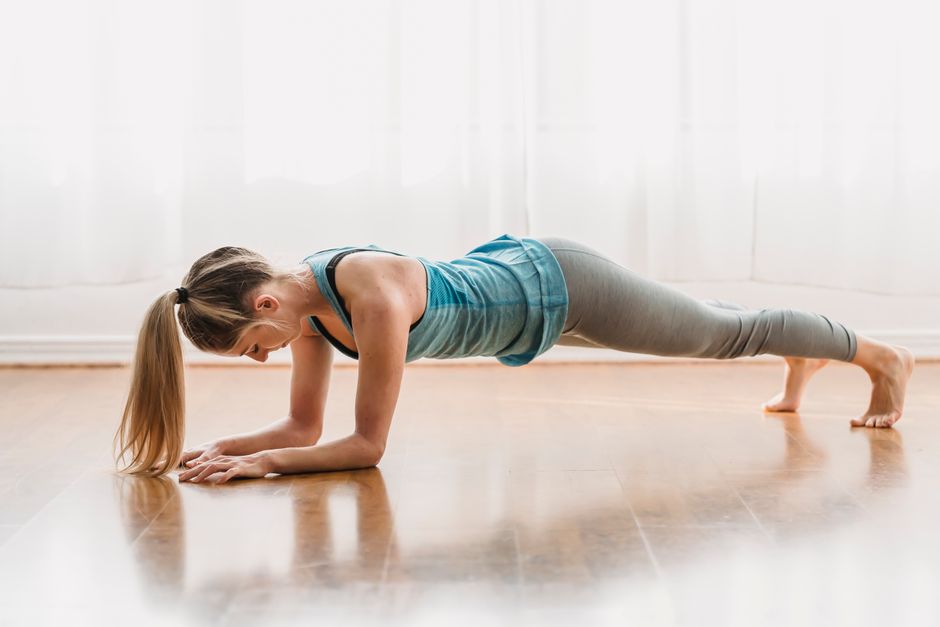
Sets and reps: 2 holds of 15–30 seconds
Rest on your forearms with elbows under your shoulders and legs extended behind you, balancing on your toes. Keep a straight line from head to heels, gently tighten your abdomen, and keep breathing. If this is too difficult, perform it with your knees on the floor or with your forearms on a raised surface. Stop the hold when your hips drop or your lower back begins to ache.
This article is general information, not medical advice. Talk to a doctor or qualified professional before starting a new exercise program.